Starting this Thursday, 23 May, I will be teaching a vinyasa class at Ships and Castles, 9:30-10:45am.
See you there,
x
Starting this Thursday, 23 May, I will be teaching a vinyasa class at Ships and Castles, 9:30-10:45am.
See you there,
x
I’ll be back at ZedShed from next Sunday, 26 May.
All other classes going ahead as usual.
xx
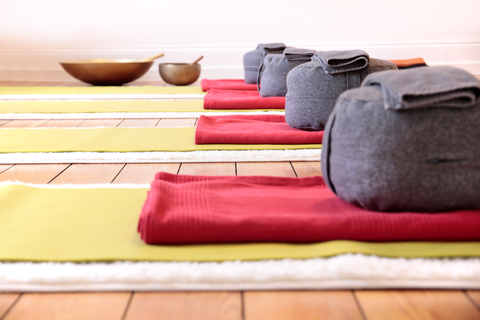 I once heard that it takes an average of two years for someone to go from ‘thinking about’ trying yoga until they walk into their first class. That’s a lot of thinking!
So if you are still thinking about trying yoga for yourself, here are some answers to the most common questions I hear from new students…
I’m not flexible enough to do yoga!
It’s true that yoga does help you to develop flexibility; the more you practise, the more your body will open up and allow you to stretch further. But, and here’s the important part, you don’t need to be flexible before you start. Yoga is much more than trying to twist yourself into a pretzel. Indeed it’s not about that at all. The aim of yoga is to help connect body, breath and mind and find a state of mental and physical spaciousness, peace and wellbeing.
Is it just for women?
No! In fact in India it used to be mainly men who practised. Today the majority of students are women, but this is changing. More and more men, including professional sportsmen and athletes are appreciating the benefits yoga can bring, not just to their sport, but other areas of their lives. Mindfulness, awareness of the breath, flexibility of mind as well as body are just some of the benefits.
I’m too tired
Yoga is a balancing practice. It has the amazing effect of energising the body, helping you feel vibrant and physically rejuvenated, while calming the mind. So if you come feeling wired, it can help you relax. If you are feeling lethargic, it can gently reinvigorate you. Plus you get to lie on the floor in Savasana at the end for the final relaxation. Savasana will help revive you faster and far better than a catnap and will help you sleep better afterwards. Don’t just take my word for it.
I don’t have time
Having time is often subjective. Its availability shifts with our changing priorities. If you are interested in yoga but think you don’t have time, try it once, if it clicks for you, you will be able to make time. And you never know, a regular practise may help you feel more focussed and able to use your time more effectively. So yoga may actually help you make time…
I don’t like chanting!
Personally I love chanting. I love India and have spent a lot of time travelling and studying yoga there, but when I first 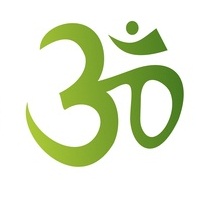 heard kirtan, or devotional chanting, I wasn’t sure what to make of it either and appreciate it can be off-putting to some students. I do chant ‘Om’ to close my classes, followed by ‘Shanti, Shanti, Shanti’ which means peace. Om is a beautiful mantra, or sound vibration. Yogis say that it is the sound of the universe, or of creation and some say that its vibration is the same as nature. Symbolically (and you may know the symbol, see right), it represents the three qualities of divine energy: creation, preservation and liberation. And that’s why we chant it in yoga. But if you are not into the history and philosophy, that’s fine. There are physiological reasons for chanting Om too. You may know that singing relaxes you, through the breath, long exhalations and by stimulating the parasympathetic nervous system, chanting has the same effect. Chanting Om helps us to connect, slows down the nervous system and calms the mind. Having said that you don’t need to join in, all students are welcome to chant Om at the end of class or to simply sit and listen, taking a moment to enjoy the state of relaxation before moving on with the rest of the day.
It’s too expensive
I believe that lack of money shouldn’t be a barrier to practising. If the class prices are too much, get in contact and we can come to an arrangement that works for you. Alternatively there are lots of free classes on the internet. Try YouTube for starters.
Final thoughts
If you don’t like one class, try another. There are many different styles and teachers out there. One is bound to work for you. Try a few, see what you like and then stick with it.
Sorry, but there’s no class this Saturday at  Falmouth Sports Club (20th April). I will be back next Saturday, 27th April.
My 9:00am Sunday class at ZedShed is going ahead as usual on Sunday 21st April. See you there…
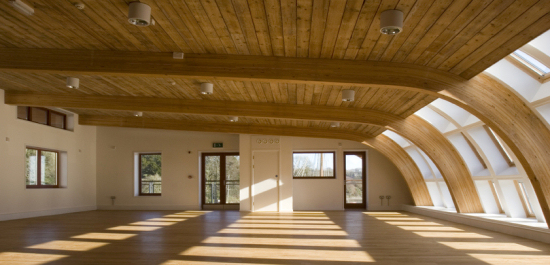 I’m now teaching a new class on Sunday mornings at the lovely ZedShed in Penryn, just above Peapod’s in Jubilee Wharf.
Beautiful views and underfloor heating, what more could you ask for in an early morning Yoga class? Come along and start your Sunday as you mean to go on, relaxed and revitalised.
9-10:30am
£8 Drop-in, £36 for 6 class pass.
I will be teaching as usual on Easter Saturday, 30 March at Falmouth Sports Club , 9 -10:30am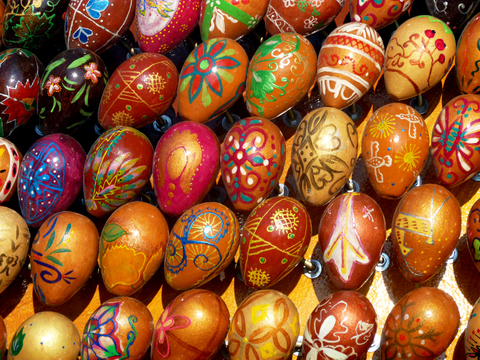
There will be no class on Easter Monday, 1st April at Tremough, classes will resume on Thursdays for the new term, starting Thursday 18th April, 6:30-7:30pm
Wednesday evening classes, 6:00 – 7:15 at Falmouth Sports Club will go ahead as usual.
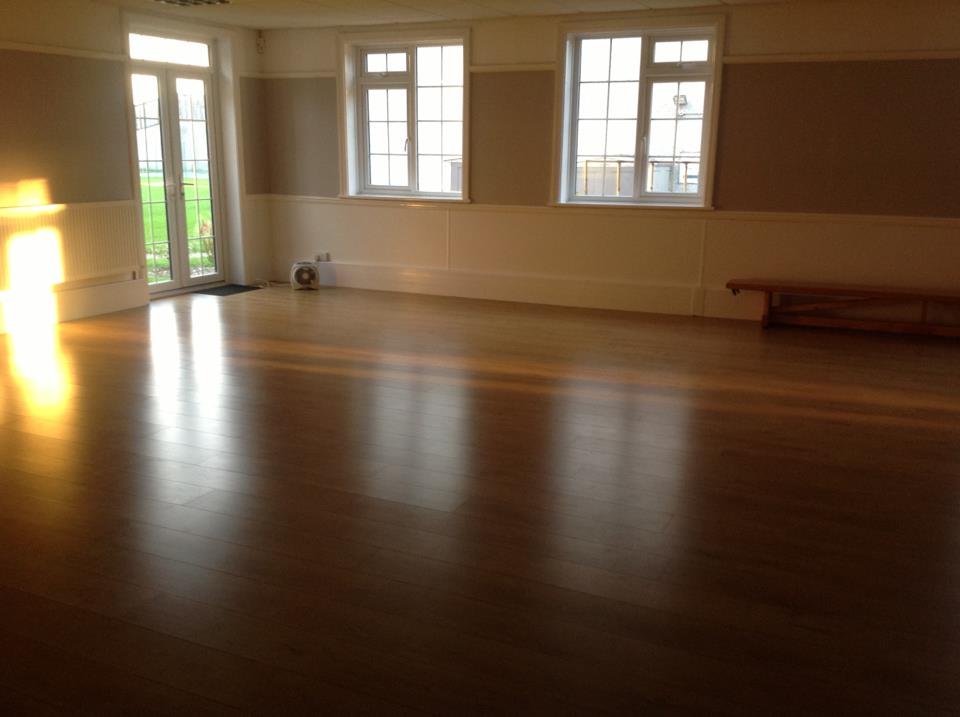 The Falmouth Beach Club is closing so my Saturday morning vinyasa class is moving back to the Falmouth Sports Club studio on Western Terrace, from Saturday 9th March onwards.
Same time – 9:00 – 10:30am
Same price – £7 drop in, £36 for 6 classes
 I’m really excited to be starting some new classes.
From Wednesday 13 March, I will be teaching a vinyasa flow class at Falmouth Sports Club every Wednesday evening from 6-7:15
From Sunday 14 April, I will be teaching a Sunday morning flow class at ZedShed, Penryn, from 9:00 – 10:30am
New students: Get your second class free
Existing students: Bring a friend and get a free class pass
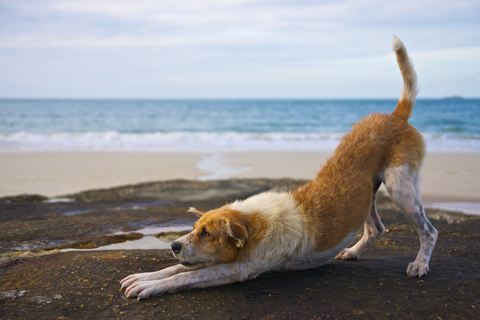 My Saturday morning class has now moved to the lovely studio, complete with sea views, at the recently reopened Falmouth Beach Club. The hotel isn’t open again yet after the fire, but the sports centre is. The entrance is currently on Gyllyngvase road.
And the good news is that the roomhire is cheaper so I can pass on the saving to you. A 90 minute class will be £7 for a drop-in or £36 for 6 classes .
Start your weekend with yoga overlooking the sea!
9-10:30am
 Many styles of yoga start the class with a flowing series of postures called Surya Namaskar, or Sun Salutations. In Sanskrit, Surya means sun, or divine light, and Namaskar (from the same linguistic root as the greeting Namaste), means to greet or bow to.
Designed to warm, awaken and open the body, the series physically prepares the body for deeper asanas as the class progresses. Starting with the simple standing posture Tadasana (Mountain pose), or Samasthiti (used to describe both the physical posture and the intention of conscious awareness, steadiness and ease), the student is encouraged to feel grounded and a sense equanimity. The flow then moves through postures designed to elongate the spine, stretch and strengthen the whole body and open the hip flexors, shoulders and back. Each movement is linked to an inhalation (stretching, backbends) or an exhalation (forward folds), and helps the student to build a conscious connection between the movement of the body and the breath.
As the student becomes more familiar with the series of postures, the alignment for each and how the breath helps smooth transitions between poses, the practice becomes a moving meditation. As well as helping the body open for deeper postures, it helps the mind become calm, clear and focussed for the rest of the class.
While some say that Surya Namaskar is thousands of years old and originated as a ritual prostration to the dawn, there is no mention of the series in the classical yoga texts. Other theories are that Indian yoga teacher, father of modern yoga and teacher to Iyengar and Patabhi Jois, Krishnamacharya, developed and popularised the series in the early 20th century, and another that the Raja of Aundh, developed it as physical fitness exercise based on gymnastics.
Wherever the origins come from the sequence is well established within the modern yoga tradition. And at the darkest time of the year, many yogis practise 108 Sun Salutations, to celebrate the days starting to get longer again, a perfect opportunity to warm and open the body and bring our awareness back to the sun and the light, consciousness, self-awareness and higher wisdom.
 Yoga
Yoga 